Thursday, July 30, 2015

First Move in Swing


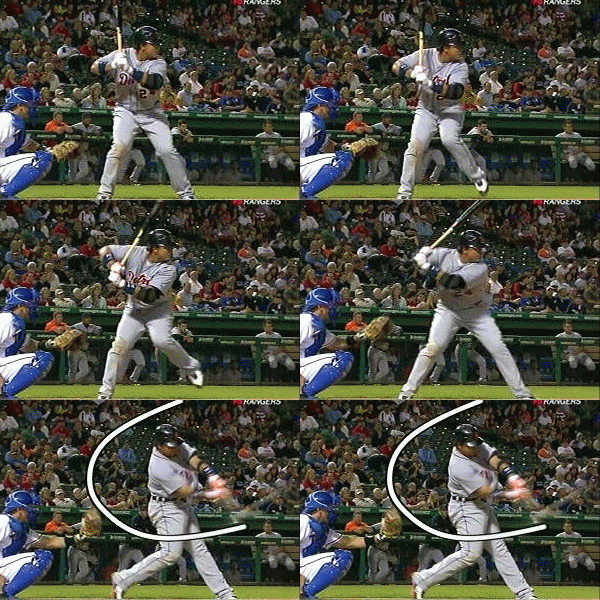
I want to look at the initial move that elite hitters make to begin the forward move to hit the ball. Most hitters have heard the term "get on plane with the pitch" or "keep the bat in the zone for as long as possible." You can see in the Miguel Cabrera video that he stays in the zone a long time which allows him to not have perfect timing and still have a chance at solid contact. It is very easy to see that most great hitters stay in the zone a long time. However, how to do this is very difficult to feel initially. I do not want to get into the details too much at this time but I want you to watch the clips and try to feel that movement the next time you are in the cage.  When you go to swing try to take the tip of your back elbow and drive it into your back hip or belt line. You won't be able to do this but that mindset may allow you to feel the initial movement that elite hitters do. We will revisit this topic over and over in this blog in the coming months.

Wednesday, July 29, 2015

Creating a Foundation


The toughest thing for young hitters to do is consistently create a base to hit from.  When I am in the cage hitting with young players the number one mechanical flaw I see is that hitters do not create a base for themselves to hit from. Most hitters are just trying to master the first swing that was taught to them. Many hitters never experiment with other ways to load. Next time you are in the cage I challenge you to try these three simple ways to create a base for yourself. Tall and fall to landing like Tullo, Hip movement in a no stride base like Goldy and the gather and go by Miggy. FEEL how your body reacts to these ways of generating momentum which ultimately create timing in your swing.

Two guys on the same base. What to do


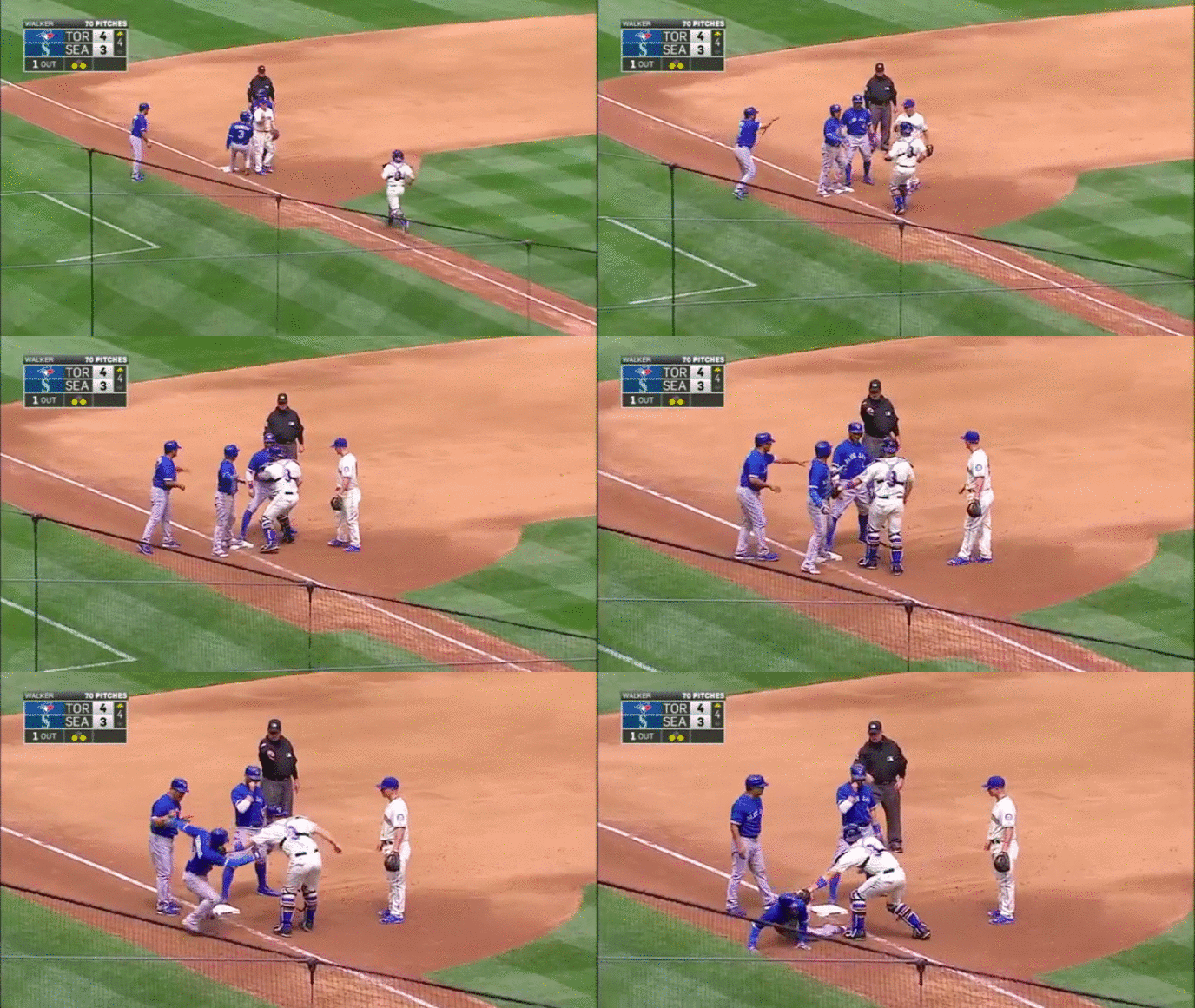
This play only comes up maybe once or twice a season. The rule is not taught by coaches correctly.  However, if you do end up there just stand there until the umpire sorts the situation out. If you are on defense and this situation comes up do exactly what the Mariner's catcher did create confusion by tagging both runners. You can see that the blue jays 3rd base coach knows the rule and is telling the trail runner to return to second. As the trail runner if you can see that the defenders are just going to run the runner back to the base you will be out if you just stand on the base so you should go back once you are 100% sure that the defense is going to just run the lead runner back to the base. Don't let this strange play cost your team a game. Coaches educate your players on the rule and if all else fails just stand on the base and let the umpire figure the situation out.

Saturday, July 25, 2015

Heads up Defense. Ways to confuse the opponent.


On Defense you've heard over and over again the importance of knowing the situation and knowing where to throw the ball. However, here are 4 videos of big league players playing the game inside the game on defense. These videos show 4 different plays where the baserunner was put in a tough position. Remember that the majority of base runners are scared to make a mistake and will therefore error on the side of caution. If you cannot make a play on the ball and have the opportunity to create doubt in a base runners mind take advantage of the opportunity. Let's quickly go through a few ways to do this.
1. Steal with ball put in play. Middle infielders can either bluff a double play turn or act like the ball was an infield pop up. The middle infielders need to work together to create confusion.
2. Outfielders: your number one goal is obviously to catch the ball in the air. If you are not going to catch the ball and there are runners on base with less then two outs if you can make it look like you are going to catch the ball it can hold the runner long enough so that he is unable to advance more then one base. Ichiro does this to perfection in these two clips.

There are a few more examples that I will revisit in a later post but these 4 videos show big league players being heads up. Remember that 99% of base runners are not great at running the bases and they can be easily mislead into making errors in judgement when running the bases.

Gedman Baseball Blog is back

I have decided to get back into blogging about the game of baseball. Back in 2012 this blog was designed as a platform to talk about pitching. I am going to expand the blog to focus on all aspects of the game.  I plan to post a new topic once a day and would love feed back on the topics discussed. Any questions or ideas for new topics can be shared in the comment section or by contacting me directly at mike@gedmanbaseball.com.

Tuesday, September 25, 2012

Non-Traditional Ways to Upset a Hitter's Timing


I learned a few more weapons for us as pitchers that I very rarely see used in Games. These are not to be used all the time. However, when you feel like the hitter is on your stuff or it is a big moment in the game where you really need an out these are tools you can and should use to your advantage that are all within the rules or close enough that they will not get called by the umpire.

1. Quick Pitch
- Usually this is done out of the stretch position and the pitchers uses a slide step. This is most effective on hitters that you recognize as having a big leg kick or a double tap during their load. The pitcher has to remember to come to a stop in the set. Then immediately after the stop the pitcher delivers the ball to home plate. If you pick your spots to use this weapon you will make it very difficult on the hitter.

2. Slow wind up
- Most hitters spend the majority of the time on deck timing up your normal delivery. Now once you start you windup at its normal tempo, slow it down as much as possible, this should help change the hitters timing as he is anticipating your normal delivery to home plate.

3.  Do not look in for the sign.
-this is done with a guy on first base. Get your sign from your catcher and then make a pick to first base. Talk to your catcher before the game and tell him that after a pick the same pitch will be on. Now get back on the rubber and come to a set and begin your delivery to home looking at either first or third depending on whether you are right handed or left handed. The hitter should be thrown by the fact that you never looked in for the sign.

4. Slide step from the windup
-If you are a guy that uses a slide step in the game when in the set just use it once in a while with two strikes out of the windup. What I mean is do your normal delivery out of the windup but when it comes time to lift your leg just don't and deliver the ball to the plate with a slide step.

5. change from the windup to the stretch with two strikes and no one on base and slide step.

There is no rule against changing from the windup to the stretch in the middle of an AB. Just come to the set position and deliver the ball with a slide step. The hitter will not be ready for it

6. Step 6 inch in front of the rubber.

Out of the windup instead of having contact with the rubber start six inches (or as much as isn't noticeable) in front of the rubber. If you do not overuse this technique it will not be called as the umpires do not pay attention to this.

Now as you incorporate these into your arsenal you will have hitters get mad and say it's unfair and you are cheating or trying to trick them. Just say cheating is when the runner at second relays the pitch or the location to the hitter.

Thursday, January 12, 2012

Controlling the Running game part 1

You can find plenty of articles, books and videos on the mechanics of pitching. I still have not addressed any mechanical aspect of pitching  because I really do not believe it is even close to a priority in the pitching game. We will go into some mechanics in later posts but here is my take on mechanics: be athletic and keep your  direction and momentum of your body directed at home plate during the entire delivery. BOOM done (for now). Now onto more important stuff. I preach in this blog the importance of controlling what you can control because as I have said once the ball leaves your hand you have little control of the outcome.

The  Running Game
In this post we will discuss the basics, in the next post I will talk about specific mechanical techniques you can use to improve your pick off move.

I have heard pitchers tell me countless times, "I just don't hold base runners well." That's an excuse, we can CONTROL this! Here is a list of things you can improve on as a pitcher to limit the running game:

1. Practice a motion from the stretch that is quick to home plate without losing the velocity or location of your pitches.
2. mix up your looks and timing
3. Have a good pick off move (to first, second and third)
4. Know the other teams runners (study them when you are not pitching)
5.Work on a slide step ( if you try this in your bullpen work and your stuff is not as good then you can't use a slide step in the game)
6. Recognize the fine line between paying attention to base runners and letting the base runner effect your ability to get hitters out.

Work on this stuff everyday. I have to be honest there are plenty of days of neglected this stuff because it can be boring and doesn't seem important until you need to pick someone off in the game. Guys that are good at holding runners have another tool to separate themselves from other pitchers. Controlling the running game will help you in big spots during your outing and may even bail you out of jams if you have the ability to pick off a runner. When you are playing catch you should go through all your pick off moves right before your flat. During your bullpens and flats you should practice your slide step and varying your looks.

Ricky Henderson is on first what do I do?
There will be times during your career where there is a guy on first base that is an excellent base runner and there is little you can do to stop him from running. In these situations a lot of pitchers become overly occupied with the base runner. Keep it simple and never let a runner effect your effectiveness as a pitcher. One thing you can do is hold the ball on the mound. The longer you hold the ball the harder it is for the runner to stay in rhythm and get a good jump. Then the next pitch after you held, you can quick pitch. This means once you come to the set immediately deliver the ball to home plate. Also, if you feel that the base runner is trying to steal you can repeatedly try to pick him off. Even if you are not successful it still makes the runner dive back into first and should make him winded. The one thing you do not want to do is rush to home plate. Remember the most important thing is that we make a quality pitch. My advice is to be conscious of the runners on base at all times but never let them affect your ability to be effective as a pitcher.

I cannot emphasize enough the importance of taking pride in your ability to hold base runners and your pick off move. With runners on base pitchers have a tendency to let the game speed up on them and forget about the runners. If you feel this happening step off the mound and slow the game down. Make sure you have addressed the running game with your infielders. Make sure you are on the same page with them about back pics, flash plays etc. If you do not do this prior to the game there will be situations where you recognize that you could pick someone off and you won't be able to. Take care of this. It is important and like I said before, picking a runner off can bail you out of a key situation during your outing.
In the next post I will show you how to develop a great pick off move.